
Our Blogs

Our Blogs

Insights & Updates

EV Charging Articles

Explore tips, industry news, and guides on smart EV charging and sustainable mobility.

8 articles published

Jun 13, 2025

5 Common Myths About EV Charging Busted

Electric vehicles (EVs) are quickly becoming a popular choice among Indian drivers thanks to growing environmental awareness, rising fuel costs, and government incentives. But even as EV adoption rises, so do the myths—especially when it comes to EV charging in India. At MyEVPoint, we believe that the right information helps you make better choices. So let's clear the air around five of the most common EV charging myths. Myth 1: EV charging takes too long Reality: Charging time depends on the charger type, your EV model, and the battery's capacity. For daily users, a home EV charger (usually an AC Level 2 charger) provides a convenient "plug it in overnight" experience. You wake up with a full battery every morning—just like charging your smartphone. For those who need faster charging, DC fast charging is the solution. These stations can recharge your vehicle from 20% to 80% in as little as 30–60 minutes, making them ideal for public and highway locations. MyEVPoint provides both AC and DC fast chargers for residential and commercial use, making charging speed flexible and reliable. Myth 2: EV charging is expensive Reality: One of the biggest advantages of EVs is cost-efficiency. On average, charging an EV at home costs ₹1 to ₹2 per kilometre, compared to ₹6–₹10/km for petrol or diesel vehicles. That's up to 70% savings on running costs. Even at public charging stations, prices remain competitive. Plus, many state governments offer incentives, reduced electricity tariffs, and subsidies for setting up EV charging stations in India. When you consider the long-term savings, EV charging is significantly more budget-friendly. Myth 3: Setting up a home charger is complicated Reality: This is one of the biggest misconceptions. Installing a home EV charger is actually simple and quick. It usually involves mounting the charger on a wall (like in your garage or driveway) and connecting it to your existing power supply. No major rewiring or structural changes are needed. At MyEVPoint, our team provides end-to-end support—from assessing your home's electrical load to professional installation and testing. We ensure your charger is safe, efficient, and compliant with local standards. Within a few hours, your home can be EV-ready. Myth 4: Public charging stations are hard to find in India Reality: This might have been true a few years ago, but not anymore. With the growing demand for EVs, the government and private players have accelerated EV infrastructure development. You can now find EV charging stations at: Malls & shopping complexes Office campuses Residential societies Hotels, restaurants, and highways MyEVPoint is actively expanding across India, building a smart and accessible charging network that supports both urban and intercity travel. Our app and website will soon feature real-time charger availability for easy navigation. Myth 5: Frequent charging damages the battery Reality: Modern EVs are equipped with Battery Management Systems (BMS) that protect the battery from overcharging, overheating, or excessive wear. In fact, regular charging—especially overnight using a home charger—is perfectly safe and helps maintain optimal range. Fast charging does create more heat, but even that is well within safety parameters and doesn't significantly affect battery life when used appropriately. Using a certified EV charger from a trusted provider like MyEVPoint ensures your vehicle's battery stays healthy. Conclusion: Don't Let Myths Stop You from Going Electric The transition to electric mobility is not just inevitable—it's smart. With easy access to home EV chargers, affordable running costs, and a fast-growing network of EV charging stations in India, now is the perfect time to make the switch. At MyEVPoint, we're more than just a charging solution provider—we're your EV partner. Whether you're installing a home charger or setting up a commercial charging hub, we deliver trusted solutions backed by expert support. Looking to install a charger at home or your business? Contact MyEVPoint for professional consultation, site inspection, and turnkey installation. Visit www.myevpoint.in to learn more.

Ankit Singh

Read More
Jun 12, 2025

Why EV Technology is the Future of Transportation

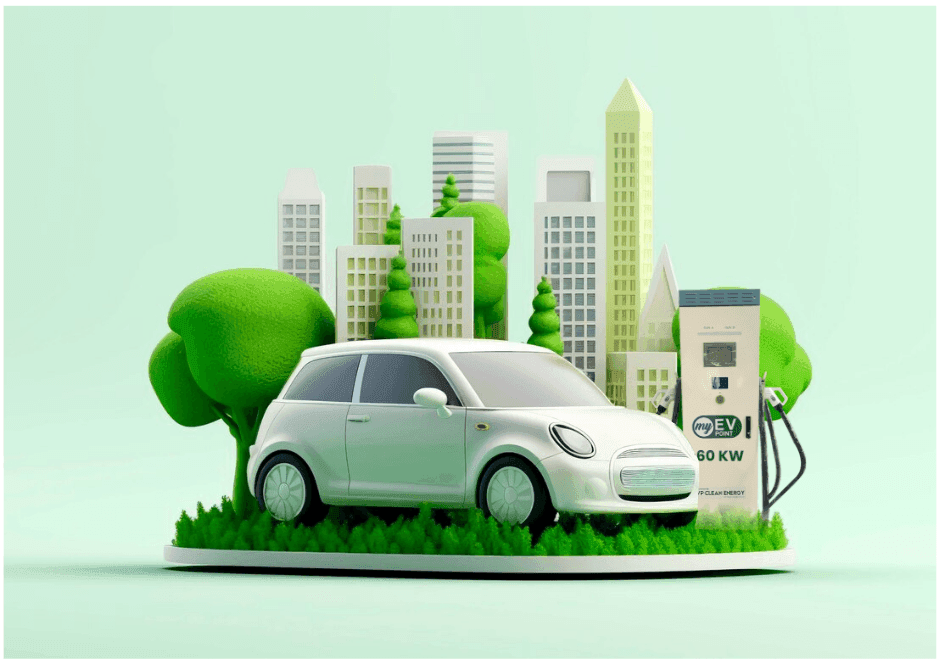
My EV point is devoted to transforming the future of transportation with their state-of-the-art electric vehicle charging solutions. Our aim is to offer reliable, accessible and efficient charging solutions in order to help promote the adoption of sustainable transportation. My EV point believes in a cleaner and greener future by providing a seamless charging experience for everyone. Why Choose My EV Point? By Choosing My EV Point, you will get to know about the benefits offered by us which make us different from others. Our key features are mentioned below- Cutting-Edge Technology: We use cutting-edge charging technology in order to provide fast, reliable and safe charging for all the EV owners. Extensive Network: We have an extensive range of EV charging stations which makes it easier for you to enjoy your long journeys without any range anxiety, as you can locate our stations easily. User-Friendly Experience: Our EV Charging App is user-friendly, making it easier for owners to find our charging stations along with using them and paying for the service. Sustainability Commitment: My EV point is devoted towards promoting sustainable transportation solutions and reducing carbon footprints, thereby promoting the low-emission future. Customer Support: At My EV point, we have a dedicated team of professionals, which remains available round the clock in order to address your queries. You can contact them if you face any issues but it related to charging station, payment or anything else. We Offer: My EV point offers its users with a wide range of products, which are mentioned below- Home Charging Solutions: We provide our users with efficient charging stations which can be installed at home. With our charging stations, you can charge your vehicle overnight and make your EV charging ready to go in the morning. Public Charging Stations: As we have a wide network of EV charging stations which are located at multiple strategic locations like urban areas, Shopping centres and also along the major highway, making it easier for people to charge their vehicles while working, shopping and on the go. Commercial Charging Solutions: My EV point offers customised solutions for those businesses which want to provide charging services for the workers and customers. Fast Charging Stations: We also ensure providing faster charging solutions to the EV owner through our DC charging stations , as sometimes people need quick top-ups and faster charging makes it convenient for users to enjoy the long travels. Our Products: 7.4 kW AC Charging Machine Our 7.4kW AC charging station can be set up at homes, urban spaces, shopping centres, airports and roadside market areas. These charging stations allow you to charge your vehicle within the time frame of 6-8 hours. 22 kW AC Charging Machine Our 22kW AC set up is known for providing high-quality charging experience to the EV owner at very affordable prices. Our 22kW AC Charging Stations are available to be installed at urban centres, shopping malls, airports or in private locations and vehicles can be charged in both cyclic and parallel modes. The time required for charging is usually 6 hours. 30 kW DC Fast Charging Machine Our 30 kW DC Fast Charging stations ensure maximum uptime even during the events of power failure that occur too rare. These stations can be installed in shopping malls, city centres, office spaces, hospitals or highway restaurants. The vehicle can be charged fully enough within 45 minutes to 1 hour. 60 kW DC (Fast) Charging Machine Those who want quick top-ups, My EV point's 60 kW DC fast charging stations act as the perfect solutions for them. EV owners can easily enjoy their long journeys with our fast charging stations, as the vehicle is charged fully enough in approximately 45 minutes to 1 hour. How to Become a Partner / Get a Franchise with Us My EV point offers tremendous franchise opportunities in EV Charging Machine to those who want to join us. If you are interested in purchasing our franchise, feel free to contact us and enjoy our offers. Contact Us: You can contact our team of professionals by visiting our website. You can talk about your interest to our team and they will provide you with all the information required. Application Process: Following this, you need to complete our application form in which you need to mention all your personal details, details of our business and also your goals related to franchise. Review Application: After submission, your application will be reviewed by our team, where a thorough assessment will be conducted whether your values align with us or not. Training and Setup On the approval of your application, a comprehensive training related to our products, services and operating procedures will be provided to you. You will also be assisted in setting up the charging station at the required place. Launch and Support: Eventually, you will launch My EV Point franchise and you will be provided with complete support and resources. You will benefit from our marketing strategies along with getting technical assistance from us. Overall, MyEVPoint has come up with the best green energy solutions for EV owners, allowing them to charge their vehicles conveniently. We also provide our users with every kind of support they require while using our services. By purchasing our franchise, you can get a lot of benefits and can run your business at a larger scale. For more information, feel free to contact us.

MyEVPoint

Read More
Jun 11, 2025

How to Install an Electric Vehicle AC Charging Station

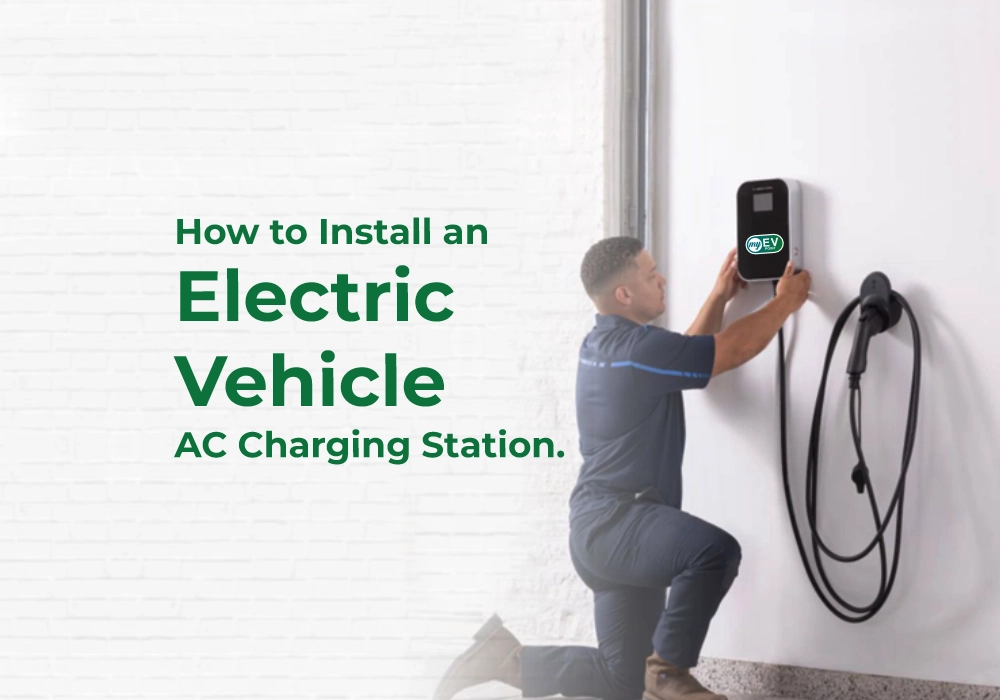
As in today's world, fuel prices are rising rapidly and staying high for a prolonged period of time, consumers increasingly have started opting for electric vehicles as a best alternative to their traditional vehicles. With EVs comes the need to have EV charging stations . Although the hype and demand for electric vehicles are rising, the demand for fast charging capabilities of electric vehicle AC charging stations is also increasing. According to the vision of the government for EVs in the nation, EV charging stations should be installed at strategic and convenient locations, meaning at every 3 kilometres within the cities and for highways, the distance should not be more than 25 kms. The Government of India is also constructing a highway called electric expressway running from Delhi to Mumbai in order to make improvements in industrial transportation. Although the demand for electric vehicle AC charging stations is rising, there are still some concerns about the steps involved in the installation of these charging stations. In this post, we will discuss the procedure of installation of electric vehicle AC charging stations . Initial Considerations and Planning Assessing Power Requirements: Initially before thinking about setting up the station, you should analyse how much of maximum power can be accepted by your electric vehicle for AC or Level 2 charging and it is important to note that it varies between 6.6 and 19.2 kilowatts for most of the EVs which are present today. You'll need to collaborate with an electrician to determine what your home or proposed location can support in terms of electrical capacity and what would be financially sensible. Types of Charging Stations: When it comes to charging stations, everyone knows that there are AC and DC chargers. Level 1 AC chargers are the slowest forms of charging EVs, as with these only 5kms of range is added after one hour of charging, that is why they are considered to be suitable for overnight charging at home. Level 2 AC chargers are faster than Level 1, as they add 30 to 50 kms of range to the EV after 1 hour of charging. Level 3 DC chargers are the superfast chargers because the vehicle is charged fully within the time frame of one hour. Installation Process Choosing the Right Charger: If you want an energy efficient charging, you should consider Level 2 chargers, as they are very popular for both home and commercial use. They offer a good balance between charging speed and infrastructural requirements. The voltage requirement for these chargers is 240 volts and the vehicle is being charged fully within 2 to 8 hours of charging but it also depends on the battery size of the car. Installation and Electrical Work: The installation involves significant electrical work, including possibly upgrading your electrical service or installing a load management system. You have to decide between hardwiring your electric vehicle charger or you can opt for installing a 240 volt plug. Each of the options comes with its own merits and demerits. Financial and Legal Aspects Costs Involved: There are various types of expenses which are involved in the installation of EV charging stations. There may be costs related to equipment, installation, operational, permit, and the licence fees. Besides this, the other types of expenses involved are because of marketing of your station, you need to market your station properly, so that you can attract more and more customers. Government Incentives: The Government of India offers various benefits to the EV owners and EV charging station owners. There are various schemes which have been put in place by the government of India such as FAME II. Apart from this, for the establishment of charging stations, the government gives capital exemptions, capital subsidies etcetera. Also, they are provided exemption in income tax and they are also provided support for public-private partnerships. Operational Considerations Maintenance and Upgrades: In order to ensure that charging stations are working effectively, you should focus on regular monitoring and upgradation. Timely upgrades are essential in order to keep in line with the technological advancements and changing standards. Promotion and Customer Experience: Once your charging station becomes operational, you have to focus on its regular promotion, as it is the key to attract a number of customers. In order to achieve success, it is crucial to provide a simple, comprehensive customer experience and this can be done by providing all-in-one smartphone access for the purpose of charging, payment, and support. Although setting up an electric vehicle charging station is a very complex procedure and there is a requirement of proper planning along with considering various factors such as technical requirements etc, it is a very rewarding investment because the use of EVs will see a significant boost in the near future. If you are planning to install an EV charging station, you should consult professionals and seek their assistance. For more information regarding anything about EV charging stations, contact MyEV point at anytime.

Jun 10, 2025

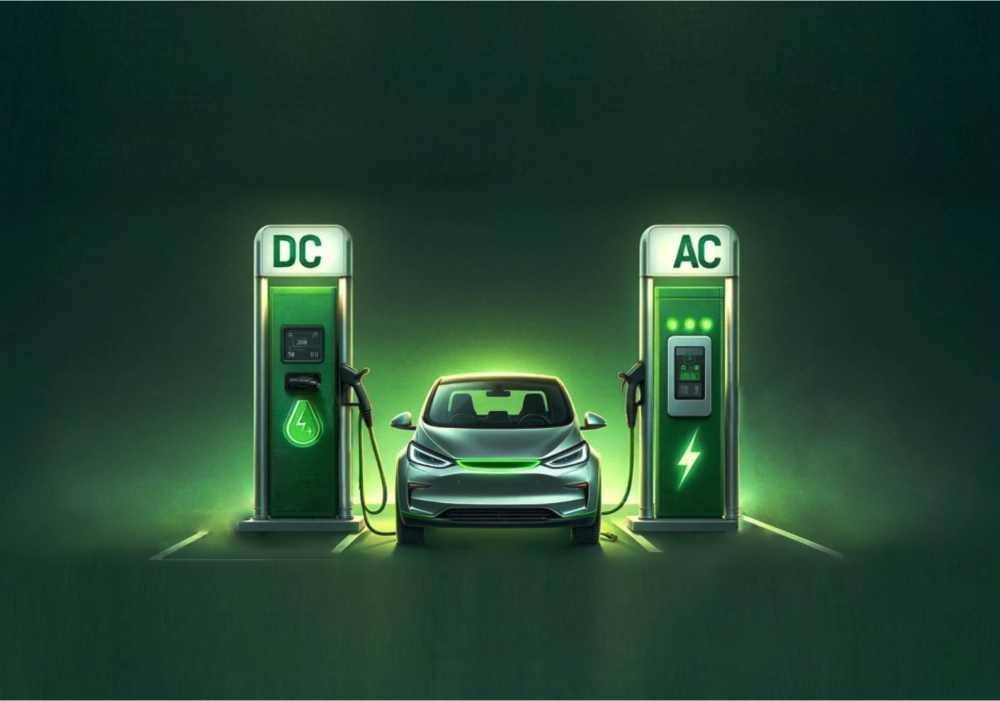
What Are the Main Differences Between AC and DC Charging for EVs?

Electric vehicle charging stations are of three types that are Level 1, Level 2 and Level 3 charging stations. Level 1: Level 1 charging equipment could easily be installed in homes, as the voltage requirement for this level is 120, which is easily available in residential areas. However, Level 1 is kind of AC charging station , is the slowest form of charging and is suitable for overnight charging at home. One more thing, it is the cheapest method of charging your EV. Level 2: Level 2 is also a form of AC charging for which voltage requirement is around 240. This charging equipment can be installed at home, public spots like parkings of workplaces and shopping malls. Level 3: Level 3 (Tesla supercharging) is the fastest form of charging an electric vehicle. The voltage requirement is quite high, between 200 and 600. As it uses DC charging, the stations providing it are also called DC charging stations . Fundamental Contrast between AC Charging Stations and DC Charging Stations Many of the differences are there between AC charging stations and DC charging stations which are mentioned below: 1) Site of Power Conversion: It is important to understand that the power which comes from the electricity grid is always AC but every electric vehicle receives only DC power. So, AC power is converted into DC in two ways : either inside the car or outside the car. All the electric vehicles have a built-in onboard charger, a gateway which converts AC power into DC and this is the only way of charging an electric vehicle. The other method of converting the power is using a DC charging station and these stations are equipped with a converter, which is the reason behind why they are called Fast charging stations . 2) Types of chargers: A wide array of AC and DC chargers is being offered by the manufacturers of EVs. Some are suitable for an individual owner and others for public charging stations . The range of AC charger is 3.3 kW, 7.2/7kW type-2, 10kW shared AC-001 and it is 1kw for hybrid AC charger. However the range of DC charger is more in comparison to its counterpart and it is 15kW, 30kW, Dual Gun 60kW and 120kW capacities. 3) Home charging with AC Chargers: AC chargers as mentioned above require low voltage which is easily available in residential areas, so with AC charging, one can easily charge a vehicle at home. One can plug in the vehicle overnight and make it ready to go in the morning. It proves to be a very cost effective method of charging. Although DC charging station installation can be done at home, it is not sensible to do so, as the voltage requirement is quite high and all the residential areas don't get that, so they require high power connection to the grid. Apart from this, they are very expensive in comparison to AC ones and the space requirement for their installation is much more. 4) Mobile Charging with AC: AC chargers are very heavy, so are not portable but AC chargers can be carried along on a trip. Apart from weight, DC chargers require more voltage, so finding a power source is not easy. 5) Charging Time: It is clear from the above mentioned information that AC chargers are being equipped with the converter, so the onboard charger located inside the car is being bypassed by the DC charging station, which leads to 10 times faster charging than AC and saves a lot of time. AC chargers, on the other hand, take a very long time to charge a small battery pack and due to this, they prove to be unsuitable for vehicles with large batteries. 6) Charging Curve: Another difference between these clean energy solutions is the shape of the curve. With AC charging, the power is delivered in the form of a flat line because the size of the onboard charger is very small. However, the charging curve in case of DC charging stations is degrading because at the initial stage the vehicle requires more energy and when it reaches its capacity, it starts accepting slower flow. 7) Cost: It is clear that AC chargers are the fastest ones and require more voltage, they are the expensive ones. So, if a user is in a hurry to go somewhere, then it is very feasible to get the electric vehicle charged from the DC EV charging network but for daily use it can be heavy on the pocket of the user. AC EV charging benefits are many, they are the cheapest ones, one can install at home which proves an even more cost-effective solution, as the cost starts from 20-22 thousand and goes up to 70-75 thousand for 11kW charger. Moreover, one can feasibly charge in office parking while working and in shopping mall's parking while shopping. 8) Charging Time: It is clear from the above mentioned information that AC chargers are being equipped with the converter, so the onboard charger located inside the car is being bypassed by the DC charging station, which leads to 10 times faster charging than AC and saves a lot of time. AC chargers, on the other hand, take a very long time to charge a small battery pack and due to this, they prove to be unsuitable for vehicles with large batteries. 9) Accessibility to the Compatible charger: Although you can have the availability of both AC and DC chargers in the market, their patterns and workings are totally different. DC chargers can only be seen installed at public charging stations but AC ones can be installed at home also. Every charger is not compatible with every vehicle but there is a device which ensures chargers' compatibility with the vehicle. Overall, both the chargers have their own unique working, performance, efficiency and cost. One should always make an informed decision by considering all the aspects of both. For more information, you can reach us at any time, our team is always at your service.

MyEVPoint

Read More
Jun 9, 2025

Home vs. Public Charging Stations: Making the Right Choice for Your EV

What is an Electric Vehicle Charging Station? An Electric Vehicle Charging Station is a place or location where people can get their Electric Vehicles charged. It is totally different from gas stations where we refuel our vehicles with gasoline and where the process is done within minutes. It is not as simple as a normal gas station procedure, as at these stations the process is time consuming depending upon the level of the charging equipment. There are three levels of EV charging: Level 1, Level 2 and Level 3 or Tesla Superchargers. The higher the level, more electricity supply is provided to the vehicle. Nowadays, Electric vehicle charging stations can easily be found in Public parking's, office parking and even the equipment can be installed at home. HOME Vs PUBLIC CHARGING STATIONS Without any doubt, it is a great convenience that EVs can be charged at home but you need to understand a few things before getting charging equipment installed at your home. There are two types of chargers which you can use at home. Level 1 charger: It requires nothing but a standard electric outlet along with a charging cable which usually is provided with your EV. It typically requires 120 volts of electricity supply and uses AC, but this type of charging is very slow and offers charging speed of 3 to 5 miles per hour. It is very suitable for vehicles with smaller batteries that are Plug-in hybrids (PHEVs) or for those which need to be driven for long distances. Level 2 charger: Most of the people prefer to install Level 2 charger at home which requires 240 volts electricity supply. These boxes cost around $300-$1200. Location: Another thing which you need to make sure of is that the charging outlet should be close to the place where you park your vehicle at home. BENEFITS OF CHARGING AT HOME: Convenience: The most reliable, flexible and convenient way for charging Electric Vehicles for EV owners is at home, as they can plug in their vehicles to the charging equipment at any time convenient to them. If they use their cars on a daily basis, they can just plug in their vehicles overnight, while they sleep and can get their cars charged enough to go. Cost-effective: Charging at home proves to be cheaper than Public Electric Vehicle Charging stations , as you do not need to pay every time you charge your vehicle. Moreover, the electricity cost is much cheaper if compared to that of petrol and diesel. So, this advantage makes house installation an ideal option for EV owners. Control: One more advantage of this approach is that the time and amount of charging required for an Electric Vehicle can be set by the owner. Along with this, cost and energy used by the vehicle could also be monitored. DEMERITS OF CHARGING AT HOME: Installation Requirement: Although there is more convenience, charging stations need to be installed at home, the method proves to be costly. Suitable for short trips: As only Level 1 and Level 2 chargers could be installed at home according the voltage demand of levels, so home charging is only beneficial if the user has to use the car for going to short distances and for long trips, user may need to charge multiple times at different places which is very time wasting and inconvenient process. Sharing of outlet: Charging speed can further slowdown if the outlet at home is shared with other appliances. BENEFITS OF CHARGING AT PUBLIC ELECTRIC VEHICLE CHARGING STATIONS: Accessibility: Nowadays, there is great availability of Public Electric vehicle charging stations in different areas and at multiple locations, it is a great convenience for users to choose locations close to them at home or even if they are travelling. Fast charging: Public Electric vehicle charging stations offer faster charging as compared to home charging solutions. Mostly Level 3 charging is being offered which is much faster than home based level 1 and level 2 charging. Every 20-30 minutes, 60 to 100 miles range is offered. Cost-effective: Installation cost can be saved by using public Electric Vehicle charging stations. DEMERITS OF CHARGING AT PUBLIC ELECTRIC VEHICLE CHARGING STATIONS: Costly: At public charging stations, people are often charged on the basis of each minute or hour, which means drivers have to pay a great sum of money to get their vehicle charged. Inconvenient: Drivers of Electric Vehicles may have to wait for their turn because of the busy availability of the stations. This can hamper the routine of people. Limited availability: Although nowadays, there are a number of charging stations at different places and areas, rural areas or some remote locations still lack the availability of them, which makes them inconvenient for people. So, both home and public electric vehicle charging stations have their own merits and demerits. It totally depends on the users which one they want to use, like if they have enough space at home or need to have short trips on a regular basis, they can go for home installation, but, in case they don't have much space or need to make long trips on a regular basis, then they must choose public electric vehicle charging stations.

MyEVPoint

Read More
Jun 8, 2025

Green Drives: Environmental and Economic Benefits of EVs

EV Charging Station? Just like normal gas stations which provide fuel like petrol, diesel etc, an electric vehicle charging station is a spot where people can get their electrical vehicles charged. The difference between gas stations and electric stations is that the former ones follow a quite simple process and vehicles are filled with fuel within seconds, but on the latter one's, it takes time to charge the vehicles depending on the level of the charger. Usually Level 1 and Level 2 charging is being used at public electric vehicle charging stations which add 12 to 80 miles every hour and 60 to 100 miles of range every 20-30 minutes correspondingly. These charging stations are available at different locations like in public parkings, official parkings and even at shopping malls' parking, thereby adding convenience to the life of people. So, one can charge their vehicle while working in offices or while shopping at shopping malls. Environmental and Economic benefits of EV charging stations: 1. Zero Harmful Emissions: Everybody is aware that fully EV charging station do not have a tailpipe and they don't lead to emission of harmful gases like hydrocarbons and carbon monoxide which are horrendous for the whole biodiversity and are responsible for global warming which is at peak in the current scenario but traditional vehicle on the other hand run on petrol and diesel and lead to harmful emissions besides this, the minor impact on the environment which comes from charging electric vehicles can be reduced with the help of choosing renewable energy options like solar energy for home electricity. Thus, electric vehicles do not lead to any carbon-footprinting. The contribution of EVs in hazardous emissions is very less even at the time they are using fossil fuels. Even if they are powered by coal, they still lead to very low emissions. 2. Reduction in Noise Pollution: Noise pollution which has become a pressing problem since a couple of decades has nothing to do with electric vehicles. These vehicles are very quiet because their hood does not contain any engine, thereby, eliminating the sound produced from the engine. Although traditional cars are provided with the silencers in order to reduce the noise, their exhaust headers produce louder noise, but there are no such issues in case of EVs, even, manufacturers have to add fake noise for the safety of pedestrians. 3. Lower Running Cost: In terms of cost, electric vehicles prove to be very cost-effective in comparison to petrol and diesel vehicles. The price of fossil fuels is much higher in current times but as electric vehicles just require electricity to power themselves, so only electricity cost is required to pay for. Even the electricity cost can be reduced significantly by using renewable forms of generating electricity. 4. Lower Maintenance Cost: The major thing to consider here is that electric vehicles do not require much servicing compared to conventional vehicles because electric vehicles are not equipped with many moving parts as compared to traditional vehicles which have internal combustion engines and thus more moving parts. 5. More Convenient in Terms of Charging: Unlike old vehicles for which you sometimes have to stand in queues waiting for your turn to get the vehicle filled with the fuel, electric vehicles can be charged at home. You can plug-in your electrical vehicle overnight while you sleep and can make it ready to go till the morning. Apart from this, electric vehicle public charging stations are available at different locations like in official parkings, parking of shopping malls and other public parking, so one can just do their work while their vehicle is being charged in their absence. 6. Tax and Financial Benefits: One of the biggest benefits of purchasing electric vehicles is less tax in comparison to vehicles running on petrol and diesel. Further, their registration fees are quite less and many other incentives are provided by the governments of different states. 7. Depletion of Petrol and Diesel Can be Controlled: The conversion rate of power from electricity is 60% in case of electric vehicles which is quite impressive, however, in case of conventional vehicles, only 17-21% of the energy from the fuels is used to power the wheels, which leads to nearly 80% of the wastage of the resources. Also, these fossil fuels are already available in finite quantities and their current usage is decreasing their availability on the blue planet. So, in this case, electric vehicles prove to be the best choices. In a nutshell, these vehicles which run on battery powered by electricity are a concept of the future. These are panacea for multiple problems of today's world and their benefits are beyond individual consumers to the society as a whole. So, it's the time to embrace EVs in order to contribute to the sustainable future.

Jun 7, 2025

Market Trends: EV Charging Evolution: Latest Market Trends and Innovations

Inevitably, the Indian automobile industry has seen a rapid growth since a couple of decades and is accelerating at a faster pace. The astonishing change to notice is that people's inclination has now started to grow towards electric vehicles and to everyone's surprise, India would have 44 million electric vehicles till 2030. Governments of different states are providing tax incentives and other subsidies not only for buyers but also for manufacturers with the agenda of increasing adoption of electric vehicles . Government is promoting the use of EVs among people in order to reduce carbon-footprint and save fossil fuels from getting depleted. Although the government has played an indispensable role in promoting the usage of EVs, the role of infrastructure in this revolutionary transformation can not be ignored and its increasing demand further accelerates the requirement of efficient and groundbreaking charging solutions. Here, we will discuss the latest market trends and innovations in the EV. EV Charging Evolution: Latest Market Trends and Innovations Plug and charge method: Traditionally, when EV owners would go to charging stations, they had to use RFID cards for initiating charging and paying bills. With the passage of time, improvements were made and people were able to pay through mobiles applications (credit cards, digital wallets) and then they were also allowed to pay through their debit cards. But the plug and charge method also called in-vehicle billing has added lots of conveniences to the life of people. As now, EVs are assigned their unique digital certificate and are provided with a secure communication module. When people take their vehicles to electric vehicle charging stations , they just need to plug in the charger and their vehicle is recognised instantly by charging stations with the help of a digital certificate. Following this, secure communication is initiated between vehicle and the charging station, and then billing information is verified automatically. After the authentication of the vehicle, charging of the vehicle starts and the user does not need to provide any input from his side. Smart EV charging: The main aim of operators of charging stations is to make user experience better and efficient. This has led to acceleration in the smart charging stations across the world which offer smart payment options like plug and charge, and reservation systems, where users can reserve a place and time for their vehicle and then get it charged conveniently. Vehicle-to-grid technology: Traditionally, there was availability of unidirectional charging only but as improvements are being made everyday, V2G charging has come into existence. It is a method where a vehicle not only gets electricity from the grid to charge but can also send surplus energy back to the grid. This is a great solution to fulfil electricity demand in the peak hours. Moreover, drivers who participate in the program get financial benefit from the government which can help them to stabilise their cost of charging. The Open Charger Point Protocol (OCPP): It is a system which ensures seamless communication between the charging stations and management. Operators can keep an eye on the performance of charging equipment and can do all the updates remotely, thereby, reducing the downtime and ensuring optimal performance. Even users can keep a check on the charging status of their vehicle along with checking the consumption of energy. New Business Models: With advancement in every aspect of EV charging, new business models are coming into existence to provide seamless user experience. Among them, one of the most beneficial is subscription based charging. Charging station operators have started to provide subscription plans to their users. Users can select the plan according to their requirement and can pay regularly, monthly or annually on the basis of the plan they have chosen. Users get many benefits from this approach like they get services at discounted rates and also get priority among others at charging stations. Not only at one particular station, they get these benefits at multiple charging stations managed by the same operator. Even they get easy access to charging at public parking spots. Advancement in battery technology: There have been many improvements in the battery technology also, firstly, the energy density has been increased in the modern day lithium batteries, as more energy can be stored in them without any changes in the physical space of them. Secondly, the adoption of modern manufacturing techniques have helped in extending the lifespan of the batteries. Moreover, these batteries coupled with improved charging equipment take less time to get charged. Eventually, it can be said that these continuous improvements are surely going to accelerate the use of Electronic Vehicles in the future. Such facilities and improvements would encourage more and more individuals to show their inclination towards EVs and this would be a huge step towards saving our natural resources, environment and our whole ecosystem and biodiversity.

MyEVPoint

Read More
Jan 25, 2024

Powering the Drive: Exploring EVs and Charging Solutions

What is an Electric Vehicle? An electric vehicle, also known as an EV is a type of vehicle that runs on electricity rather than on gasoline. These vehicles are equipped with a motor that draws power from a battery, which can be charged at home or at charging stations located in places like public parking lots, office spaces and shopping malls. Once the battery is sufficiently charged it provides power to the motor enabling the vehicle to operate. One notable advantage of vehicles is their eco-friendliness since they do not emit gases like traditional petrol or diesel powered cars. Types of Electrical Vehicles: There are two types of electric vehicles; battery electric vehicles (BEVs) and Plug-in hybrid electric vehicles (PHEVs). BEVs BEVs solely rely on batteries for power. They do not have combustion engines ensuring zero emissions. PHEVs On the other hand, PHEVs combine both a motor and an internal combustion engine. They primarily use battery power but can switch to the combustion engine when needed. What is an Electric Vehicle Charging Station? It is a place where electrical vehicles are being charged. The normal gas stations, which provide gasoline, follow a very simple and quick procedure but EV charging stations provide electricity which is used by the car to power itself. At these stations, you go and plug in your vehicle into a charging station and it takes time for the vehicle to get charged. Even nowadays, these charging stations can be found installed in public parkings, office parking, shopping malls parking and at homes also. What are the different types of EV Charging Stations? There are basically three levels of EV charging often called level 1, level 2, level 3. The level 3 is divided into DC Fast Charging and Tesla supercharging. Higher the level, more power is supplied to the vehicle. Every electric vehicle charges at a different rate, as EVs have their own acceptance of power. Unlike refuelling a car with gasoline which is a swift and straightforward method, as one can choose from regular, mid-grade or premium gasoline or diesel, electric vehicle recharging is not that simple or quick. This is the thing which one needs to understand and would be explained below according to the levels of EV Charging: LEVEL 1: Description: Standard electric 120 volt household outlet is being used. Charging speed: Speed of 3 to 5 miles per hour is being offered. Locations: Vehicles can be charged at home, office and public parkings. Ideal for overnight charging at home. By level 1 charging, also called AC charging station , every electric vehicle or Plug-in hybrid can be charged. The charger equipment just needs to be plugged into a regular wall outlet. Although the process is convenient, it is a very slow way of charging an EV, as only 3 to 5 miles of range is added every hour. It is suitable for plug-in hybrid electric vehicles (PHEVs), as they are equipped with smaller batteries that are less than 25kWh but this level charging proves to be extremely slow for EVs because they have larger batteries. It only proves suitable for vehicles which need to be driven for short distances on a regular basis. LEVEL 2: Description: 240 volt of electrical supply is required which is somewhat similar to what powers an electric dryer. Charging speed: Speed of 12 to 80 miles per hour is being offered. Locations: Vehicles can be charged at home, office and public parkings. It is most often used for daily EV charging, it uses AC and the charging equipment used could easily be installed at places like home, workplace or in public locations. Level 2 charging adds between 12 and 80 miles of range per hour with respect to the power output of the charger and maximum charging rate of the vehicle. Level 2 charging station is given preference by most of the EV owners for home installation, as more than 10 times of charging speed is offered by level 1 and vehicles can be charged fully overnight. LEVEL 3: Description: 400 volt to 900 volt of electricity supply is required [ DC fast charging stations & Supercharging Stations ]. Charging speed: Speed of 60 to 100 miles is being offered every 20-30 minutes. Locations: Public DC charging stations. The fastest type of charging available in the present epoch is the Level 3 charging, as it can add 60 to 100 miles of range every hour. Direct current (DC) is being used by Level 3 equipment. The reason why these stations are always found in public is the high voltage requirement which is not available in residential areas except very few locations. One more important thing to note here is its installation cost which is more than the cost of an EV. It is also called supercharging because Tesla calls its Level 3 Chargers, The Superchargers.

Locations

Find Nearby Branches

Support

24/7 Emergency Services