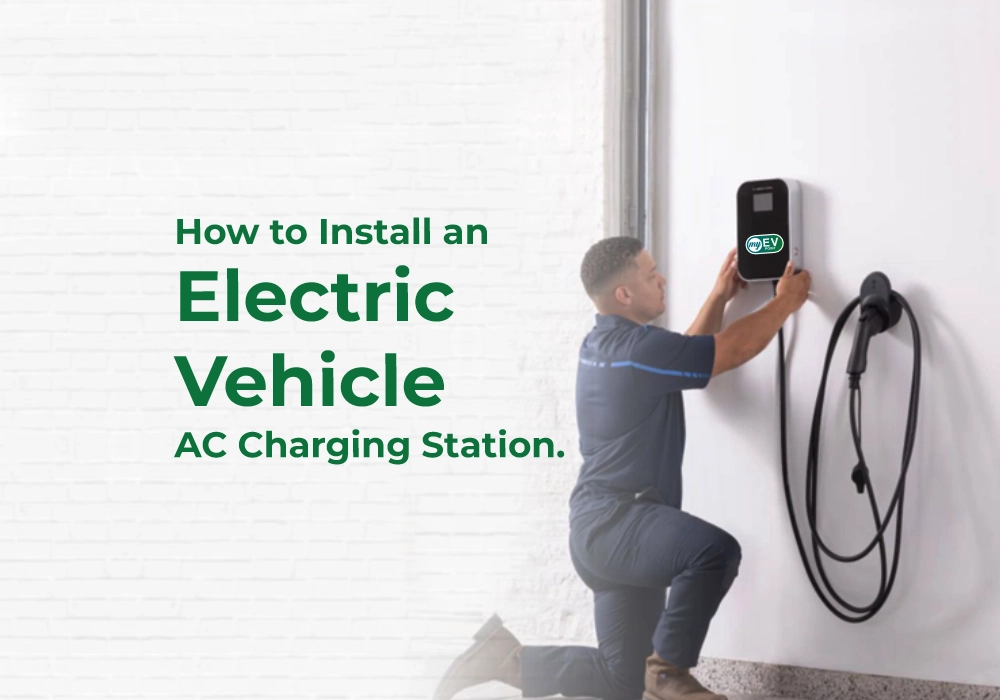
As in today's world, fuel prices are rising rapidly and staying high for a prolonged period of time, consumers increasingly have started opting for electric vehicles as a best alternative to their traditional vehicles. With EVs comes the need to have EV charging stations . Although the hype and demand for electric vehicles are rising, the demand for fast charging capabilities of electric vehicle AC charging stations is also increasing. According to the vision of the government for EVs in the nation, EV charging stations should be installed at strategic and convenient locations, meaning at every 3 kilometres within the cities and for highways, the distance should not be more than 25 kms. The Government of India is also constructing a highway called electric expressway running from Delhi to Mumbai in order to make improvements in industrial transportation. Although the demand for electric vehicle AC charging stations is rising, there are still some concerns about the steps involved in the installation of these charging stations. In this post, we will discuss the procedure of installation of electric vehicle AC charging stations . Initial Considerations and Planning Assessing Power Requirements: Initially before thinking about setting up the station, you should analyse how much of maximum power can be accepted by your electric vehicle for AC or Level 2 charging and it is important to note that it varies between 6.6 and 19.2 kilowatts for most of the EVs which are present today. You'll need to collaborate with an electrician to determine what your home or proposed location can support in terms of electrical capacity and what would be financially sensible. Types of Charging Stations: When it comes to charging stations, everyone knows that there are AC and DC chargers. Level 1 AC chargers are the slowest forms of charging EVs, as with these only 5kms of range is added after one hour of charging, that is why they are considered to be suitable for overnight charging at home. Level 2 AC chargers are faster than Level 1, as they add 30 to 50 kms of range to the EV after 1 hour of charging. Level 3 DC chargers are the superfast chargers because the vehicle is charged fully within the time frame of one hour. Installation Process Choosing the Right Charger: If you want an energy efficient charging, you should consider Level 2 chargers, as they are very popular for both home and commercial use. They offer a good balance between charging speed and infrastructural requirements. The voltage requirement for these chargers is 240 volts and the vehicle is being charged fully within 2 to 8 hours of charging but it also depends on the battery size of the car. Installation and Electrical Work: The installation involves significant electrical work, including possibly upgrading your electrical service or installing a load management system. You have to decide between hardwiring your electric vehicle charger or you can opt for installing a 240 volt plug. Each of the options comes with its own merits and demerits. Financial and Legal Aspects Costs Involved: There are various types of expenses which are involved in the installation of EV charging stations. There may be costs related to equipment, installation, operational, permit, and the licence fees. Besides this, the other types of expenses involved are because of marketing of your station, you need to market your station properly, so that you can attract more and more customers. Government Incentives: The Government of India offers various benefits to the EV owners and EV charging station owners. There are various schemes which have been put in place by the government of India such as FAME II. Apart from this, for the establishment of charging stations, the government gives capital exemptions, capital subsidies etcetera. Also, they are provided exemption in income tax and they are also provided support for public-private partnerships. Operational Considerations Maintenance and Upgrades: In order to ensure that charging stations are working effectively, you should focus on regular monitoring and upgradation. Timely upgrades are essential in order to keep in line with the technological advancements and changing standards. Promotion and Customer Experience: Once your charging station becomes operational, you have to focus on its regular promotion, as it is the key to attract a number of customers. In order to achieve success, it is crucial to provide a simple, comprehensive customer experience and this can be done by providing all-in-one smartphone access for the purpose of charging, payment, and support. Although setting up an electric vehicle charging station is a very complex procedure and there is a requirement of proper planning along with considering various factors such as technical requirements etc, it is a very rewarding investment because the use of EVs will see a significant boost in the near future. If you are planning to install an EV charging station, you should consult professionals and seek their assistance. For more information regarding anything about EV charging stations, contact MyEV point at anytime.